
13-Week Cash Flow Modeling
Build a disciplined 13-week cash-flow model that connects operating assumptions, working capital, financing, and liquidity decisions.
A practical framework for short-term liquidity
A 13-week cash-flow model turns operational detail into a clear view of liquidity. Work through the structure, drivers, and review discipline required to forecast receipts, disbursements, working capital, and financing needs in a changing business environment.
The session at a glance
Format · Live instructor-led webinar or in person
Learning objectives · Build a connected short-term cash-flow forecast, translate operating drivers into weekly cash movement, reconcile direct and indirect views, and use variance analysis to improve the rolling forecast.
Live instruction. Real liquidity context.
Work through the practical decisions behind a 13-week cash forecast—from defining the model architecture to reviewing variances and explaining liquidity risk. The emphasis is on an auditable, decision-ready model rather than a static spreadsheet.


Who this course is for
Finance professionals, FP&A teams, treasury professionals, restructuring advisors, and analysts who need a reliable view of near-term cash availability and the operating drivers behind it.
Preparation
Come prepared with a public or non-sensitive example of a business whose cash timing, working capital, or liquidity you would like to understand more clearly. A calculator is useful; no prior template or platform access is required.
What you will be able to do
- Build a weekly cash view that connects operating assumptions to liquidity.
- Trace how working capital and financing decisions affect cash timing.
- Reconcile direct and indirect cash-flow perspectives.
- Update the forecast with actuals and explain the resulting variances.
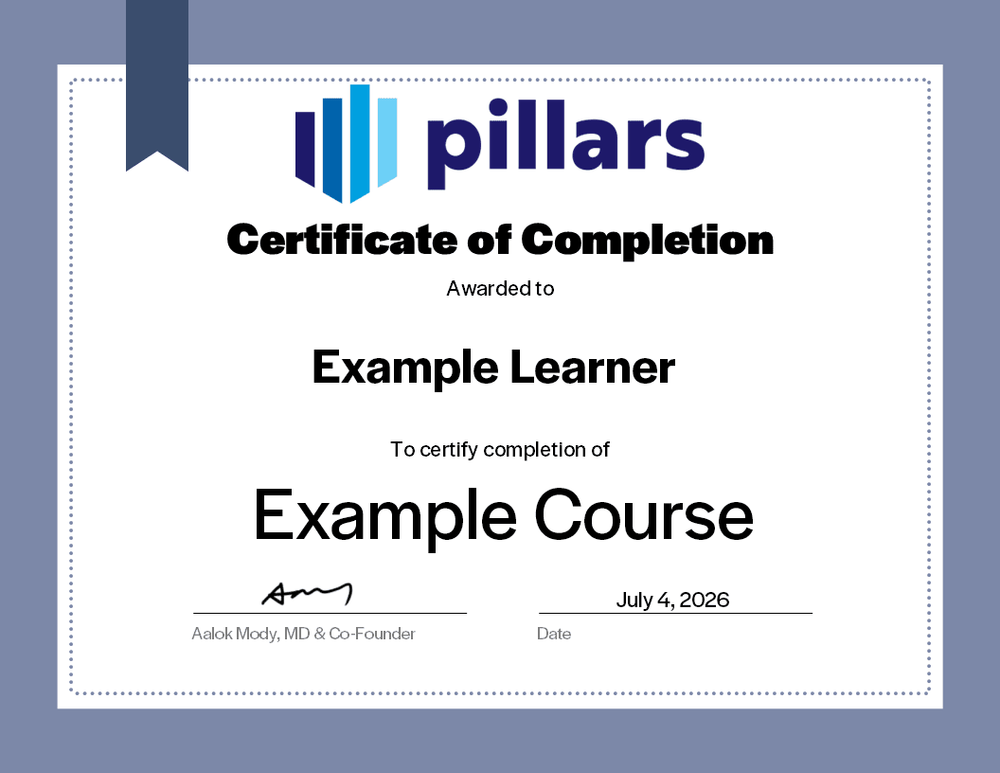
Your certificate of completion
Upon completion, you will receive a certificate signifying your completion. Add it to your LinkedIn profile, résumé, or professional-development record.
Course agenda
Move from a business question to a connected cash forecast and a disciplined review process.
From operating drivers to a rolling liquidity view
Define the forecast horizon and outputs, translate operating assumptions into weekly receipts and disbursements, model working-capital and financing effects, reconcile direct and indirect cash views, then roll the forecast forward with actual results and variance analysis.
Common questions
The practical details, in one place.
Is this live or on demand?
This is a live course that may be delivered via webinar or in-person.CPE availability is confirmed for the specific scheduled offering before registration. Contact Pillars to discuss your team’s requirements.
What does the session cover?
Practical AI use cases in finance, better prompt design, verification of generated work, and responsible handling of information. The emphasis is on using AI with sound professional judgment.Yes. Pillars can adapt examples, pacing, and emphasis to the roles, workflows, and goals of your finance team.
Are recordings, materials, or certificates included?
Materials are included with the course as well as a certificate indicating completion. Recordings availability is subject to contract.
I am a CPA, can this course offer CPE credit?
Yes! Pillars is licensed to provide CPE credit hours for this course.