
3 Statement Cash Sweep Modeling
Build a three-statement cash sweep model that directs excess cash to debt repayment in the correct priority.
Connect operating cash flow to debt repayment
A cash sweep model uses cash generated by the business to reduce outstanding debt while preserving a minimum operating balance. Participants learn how to build the statements and schedules in the correct order, calculate cash available for repayment, apply debt priority, and integrate interest and circularity.
The session at a glance
Format · Live instructor-led webinar or in person Learning objectives · Explain the purpose of a cash sweep; calculate cash flow available for debt repayment; build debt-priority logic; link debt balances to the balance sheet and cash flow statement; calculate interest using the debt schedule; manage circularity; and test the integrated model.
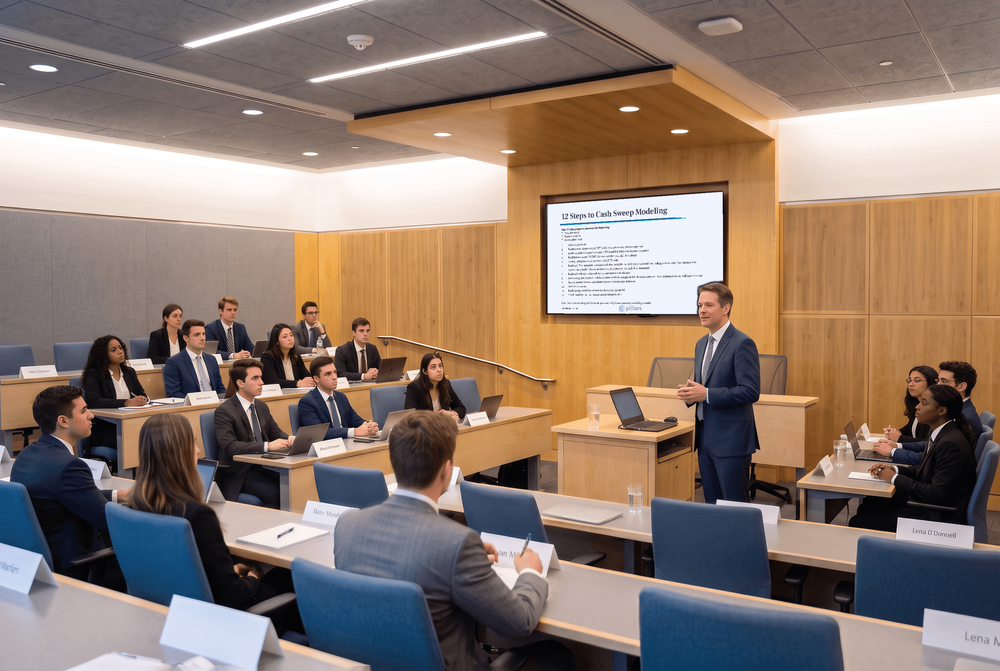
Live instruction. Follow cash from operations to debt repayment.
The instructor works through actual Pillars cash sweep materials that distinguish the build from a standard non-cash-sweep model. Participants see how cash available for repayment, debt hierarchy, balance-sheet links, financing cash flows, interest, and circularity fit into one integrated model.

Who this course is for
Designed for leveraged-finance, private-equity, private-credit, investment-banking, restructuring, corporate-finance, and accounting professionals, as well as students, who need to model debt paydown from operating cash flow.
How to prepare
Participants should understand the three financial statements, basic debt schedules, and Excel formulas. Review how a minimum cash balance and contractual debt priority can affect repayment. Bring a simplified capital structure if you would like to discuss how it would sweep cash.
Course agenda
Build the operating forecast, calculate cash available for repayment, and integrate the sweep through debt, interest, and the statements.
Define assumptions and debt priority
Set the minimum cash balance, debt tranches, required repayments, and seniority rules that drive the sweep.
Build the operating statements and schedules
Construct the income statement, working-capital calculations, fixed-asset schedules, and other operating drivers.
Calculate cash available for repayment
Build the cash flow statement and determine the cash that can be applied after the operating minimum is preserved.
Build and integrate the cash sweep
Apply repayment logic by tranche and link ending debt balances and financing flows to the balance sheet and cash flow statement.
Calculate interest and check the model
Wire interest through the income statement, control circularity, stress assumptions, and verify balance and debt-paydown behavior.
A certificate worth sharing
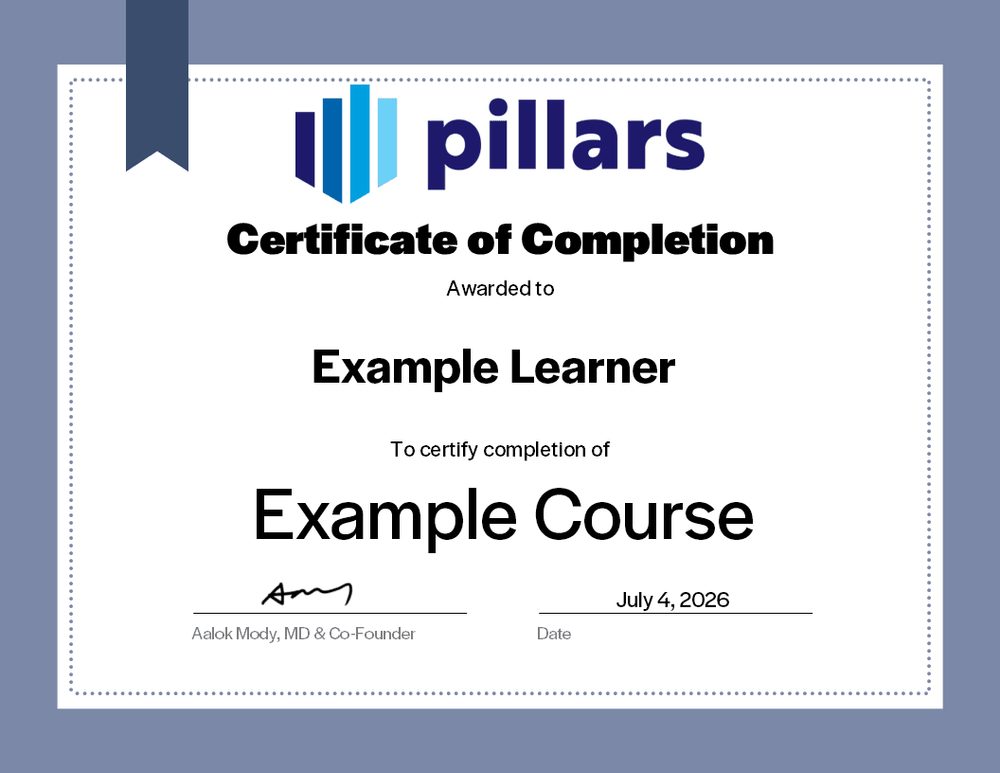
Upon completion, you will receive a certificate signifying your completion. Add it to your LinkedIn profile, résumé, or professional-development record.
Common questions
The practical details, in one place.
Is this live or on demand?
This is a live, instructor-led course delivered as a webinar or in person for a private business or school group.
What does the session cover?
The session covers cash sweep assumptions, minimum cash, debt priority, cash available for repayment, the three statements, debt and interest schedules, circularity, and model checks. It focuses on cash-sweep modeling rather than credit-document interpretation.
Are recordings, materials, or certificates included?
Live sessions include the materials used during the program and a certificate of completion. Recordings are not included unless explicitly arranged in advance.
I am a CPA, can this course offer CPE credit?
Yes. Eligible live sessions can be offered for CPE credit when the program is delivered and documented in accordance with Pillars’ CPE policies. Confirm the specific engagement details with Pillars before the session.
Bring practical cash sweep modeling to your team.
Give your team a consistent method for translating operating cash generation and debt priority into an integrated repayment model.