
AI in Finance — Design Preview
Turn AI into a practical finance tool. Research faster, ask better questions, and validate the work that matters.
Overview · What you’ll learn · Who it’s for · Agenda · Certificate sample · FAQs
Put AI to work. Keep your judgment.
Move beyond experimenting with prompts. Explore practical ways to use AI for finance research, analysis, and decision support—while staying accountable for the final work.
This course pairs everyday finance use cases with a disciplined approach to checking sources, calculations, assumptions, and conclusions.
The session at a glance
Format · Live Instructor-led webinar or In-Person Learning Objectives · Identify practical AI applications in finance, write effective prompts, validate AI-generated work, and protect sensitive information.
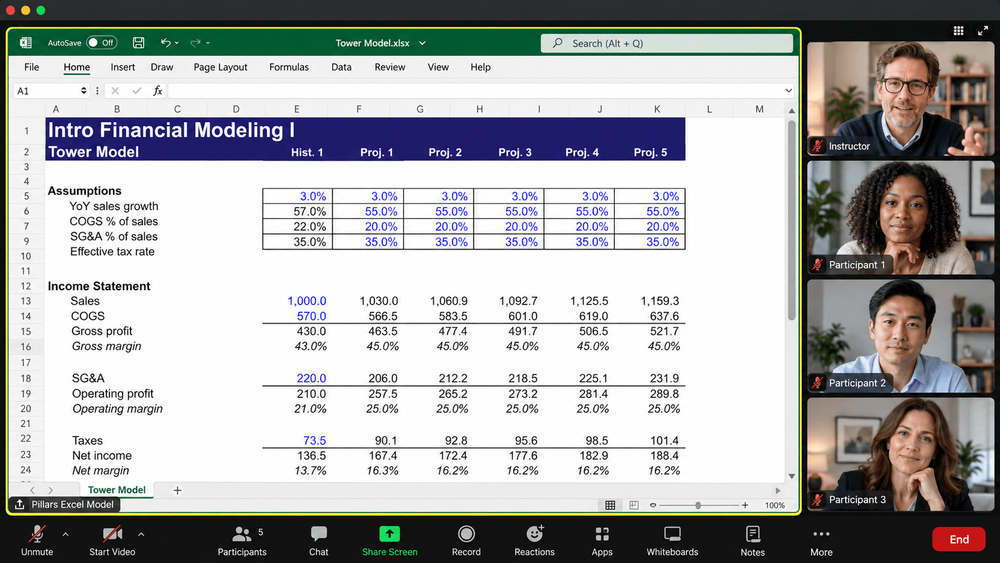
Live instruction. Real finance context.
What to expect
- Instructor-led learning focused on the work finance professionals do.
- Practical demonstrations of AI-assisted research, analysis, and communication.
- A responsible-use mindset that combines efficiency with verification, confidentiality, and professional judgment.
The goal is not simply to produce an answer faster. It is to know when that answer is useful—and how to check it.

Who this is for
- Finance and accounting professionals exploring practical AI applications.
- Analysts who research, summarize, and communicate financial information.
- Managers evaluating how AI fits into a responsible team workflow.
The focus is applying and reviewing AI-assisted work—not replacing financial expertise.
Come ready to think critically
- Bring a finance task you would like to improve and the questions you would ask before trusting an AI-generated answer.
- Use only public or non-sensitive examples. Follow your organization’s AI and data-handling policies.
- The published session is a live demonstration of practical workflows. Specific software, access, and preparation details should be confirmed before registration.
A practical path from prompt to decision
Session agenda
Four connected topics bring the course objectives into focus. Expand each section to explore the course outline.
01 · Identify useful finance applications
- Where AI can support research, information synthesis, analysis, and decision support.
- How to choose a focused task with a clear definition of a useful result.
- When a finance professional should take the lead rather than defer to a tool.
02 · Write and refine better prompts
- Define the objective, context, constraints, and output format.
- Break a broad request into manageable steps.
- Use follow-up questions to surface assumptions and improve the response.
03 · Check the work before using it
- Verify sources and distinguish evidence from unsupported assertions.
- Review calculations, assumptions, and conclusions.
- Recognize hallucinations and challenge answers that sound more certain than the evidence supports.
04 · Make responsible use repeatable
- Protect confidential and proprietary information.
- Place human review at the points where errors could affect a decision.
- Build a repeatable workflow that preserves professional accountability.
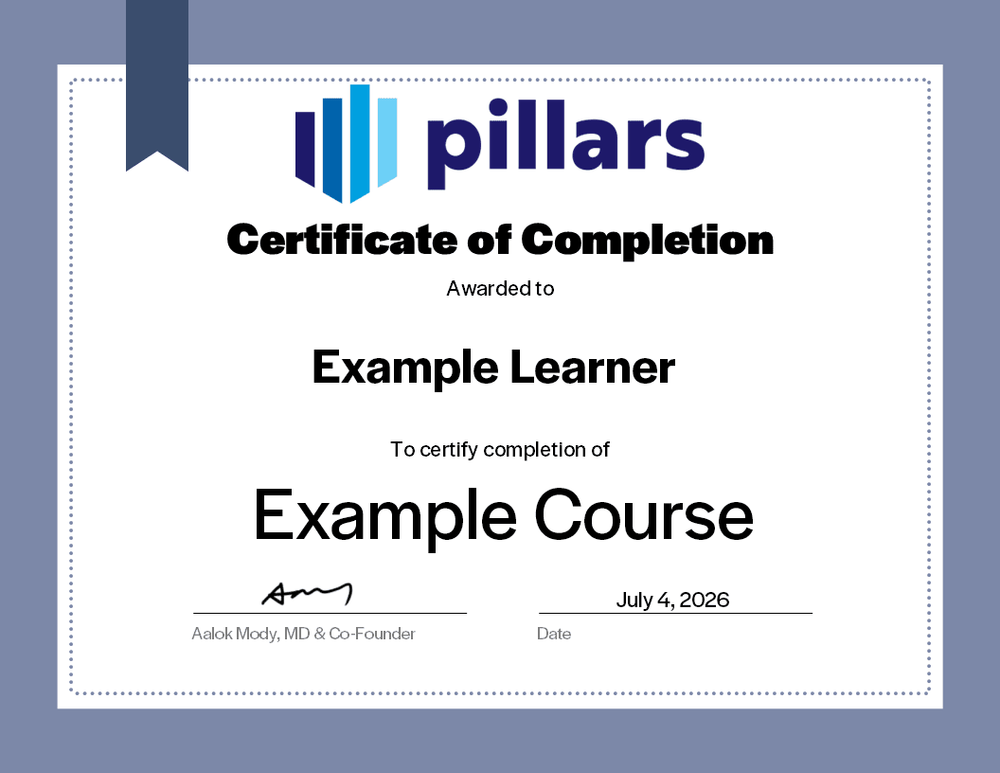
Your certificate of completion
Upon completion, you will receive a certificate signifying your completion. Add it to your LinkedIn profile, résumé, or professional-development record.
Common questions
The practical details, in one place.
Is this live or on demand?
This is a live course that may be delivered via webinar or in-person.
What does the session cover?
Practical AI use cases in finance, better prompt design, verification of generated work, and responsible handling of information. The emphasis is on using AI with sound professional judgment.
Are recordings, materials, or certificates included?
Materials are included with the course as well as a certificate indicating completion. Recordings availability is subject to contract.
I am a CPA, can this course offer CPE credit?
Yes! Pillars is licensed to provide CPE credit hours for this course.