
Complexities with Quarterly Forecasting
Build quarterly forecasts that reconcile to the annual view and keep working capital, debt, and cash flow connected.
Make each quarter work—and the year reconcile.
A quarterly model needs more than an annual forecast divided into four columns. Timing assumptions must work within each quarter, while the full-year view must aggregate flows and preserve the right balance-sheet positions.
This course works through the practical complexities of an integrated quarterly operating model. Participants connect the income statement, working-capital calculations, debt schedules, and cash flow statement, with particular attention to mixed quarterly and annual columns. The emphasis is on consistent formulas, traceable assumptions, and checks that reveal timing errors before they distort the forecast.
The session at a glance
Format · Live Instructor-led webinar or In-Person
Learning objectives · Structure quarterly and annual forecast periods; apply consistent quarterly growth and timing assumptions; connect working capital and a cash-sweep debt schedule; model share issuances and buybacks in weighted-average shares; reconcile the three statements and annual totals.
Live instruction. Practical application.
Work through an integrated quarterly model with the instructor, checking the relationship between operating forecasts, balance-sheet assumptions, and debt movements.
Participants examine formulas alongside the financial logic. Discussion focuses on why an annual total or quarterly movement is appropriate, rather than copying the same aggregation rule across every row.


Who this is for
- Analysts who already build annual three-statement forecasts and need a quarterly model.
- FP&A and corporate-finance teams reviewing near-term operating and liquidity forecasts.
- Accounting and advisory professionals evaluating the consistency of quarterly financial models.
Come ready to apply the ideas
- Be comfortable with an integrated three-statement model, working-capital assumptions, and a basic debt schedule.
- Plan to use Excel for modeling exercises if included in your agreed session. We will confirm the workbook and software requirements beforehand.
- Think of a quarterly forecasting issue your team encounters, such as annual roll-ups or interest timing. Use a non-confidential example for discussion.
The course agenda
Explore the topics below. We can tailor the emphasis to your team’s needs.
01 · Set up the quarterly and annual views
Organize historical and forecast periods so that quarterly calculations and annual summaries remain clear. Distinguish flow aggregation from period-end balances.
02 · Build the operating and working-capital forecast
Apply quarterly operating assumptions and connect the supporting balance-sheet calculations. Review how period length affects the interpretation of working-capital metrics.
03 · Connect financing and cash flow
Integrate debt movements, cash-sweep assumptions, and interest with the correct periods. Trace share issuances and buybacks into weighted-average shares and carry the resulting effects through the three financial statements.
04 · Review the model for consistency
Test annual reconciliations, formula patterns, and statement links. Diagnose common errors caused by mixing quarterly and annual assumptions.
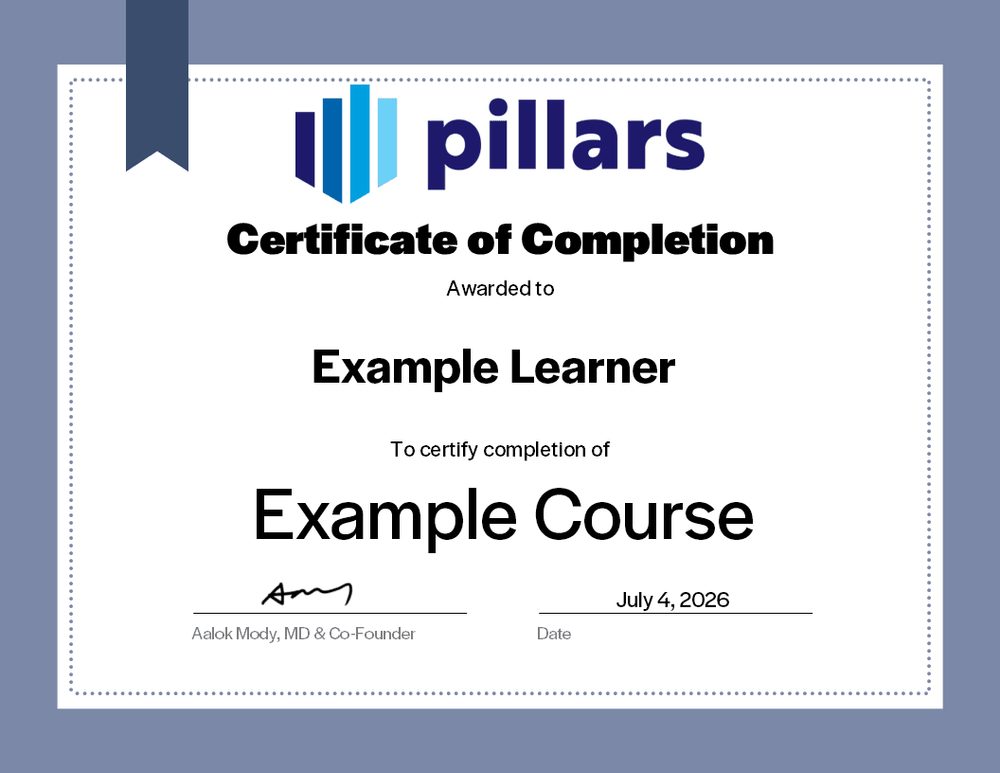
Your certificate of completion
Upon completion, you will receive a certificate signifying your completion. Add it to your LinkedIn profile, résumé, or professional-development record.
Common questions
The practical details, in one place.
Is this live or on demand?
This is a live course that may be delivered via webinar or in-person.
What does the session cover?
Quarterly and annual model structure, operating forecasts, working-capital timing, cash-sweep debt and interest integration, share issuances and buybacks, weighted-average shares, and statement reconciliation.
Are recordings, materials, or certificates included?
Materials are included with the course as well as a certificate indicating completion. Recording availability is subject to contract.
I am a CPA, can this course offer CPE credit?
CPE availability is confirmed for the specific scheduled offering before registration. Contact Pillars to discuss your team’s requirements.