
Direct Public Offerings and Direct Listings
Compare direct offerings, direct listings, and IPOs through the decisions that matter to issuers and investors.
Understand the route to market before choosing it.
Taking a company public involves more than choosing an exchange. The route affects how shares reach investors, how prices emerge, and what existing owners can do with their holdings.
This course separates direct public offerings from direct listings and conventional IPOs. Participants examine the role of intermediaries, the issuer’s objectives, investor access, and the trade-offs around execution and liquidity. Historical company examples make the differences concrete without treating one structure as the right answer for every issuer.
The session at a glance
Format · Live Instructor-led webinar or In-Person
Learning objectives · Distinguish direct offerings from direct listings and IPOs; explain the role of underwriting and financial advice; compare capital-raising and shareholder-liquidity objectives; evaluate pricing, distribution, and execution considerations.
Live instruction. Practical application.
Compare offering structures using issuer objectives and historical transactions. The instructor traces how a transaction moves from preparation to market, with discussion of pricing, investor participation, and liquidity.
Participants practice explaining the commercial differences clearly, including where transaction-specific regulatory or legal advice is needed.


Who this is for
- Investment-banking and capital-markets professionals evaluating routes to public ownership.
- Corporate-finance teams preparing to discuss financing and liquidity alternatives.
- Accounting and advisory professionals who support issuers or their shareholders.
Come ready to apply the ideas
- Bring a working understanding of common stock, share issuance, and basic capital-market terminology.
- Consider whether a company’s priority is new capital, shareholder liquidity, or both. Use a public example if you would like to discuss a specific situation.
- No company filing or proprietary transaction material is required. We can agree on the examples and level of detail before delivery.
The course agenda
Explore the topics below. We can tailor the emphasis to your team’s needs.
01 · Start with the issuer’s objectives
Distinguish financing needs from the desire to provide liquidity for existing shareholders. Establish why those objectives lead companies to consider different routes to public ownership.
02 · Examine the direct offering process
Follow the preparation, marketing, and subscription stages of a direct offering. Discuss the issuer’s responsibilities and how the absence of a conventional underwriting commitment affects execution.
03 · Understand direct listings and IPOs
Compare share availability, price formation, and the roles of intermediaries. Explain why a listing decision should account for company visibility and the likely investor base.
04 · Evaluate the trade-offs through examples
Use historical company examples to compare costs, liquidity, and execution uncertainty. Develop a balanced explanation of the alternatives rather than assuming that avoiding an underwriter removes all transaction risks.
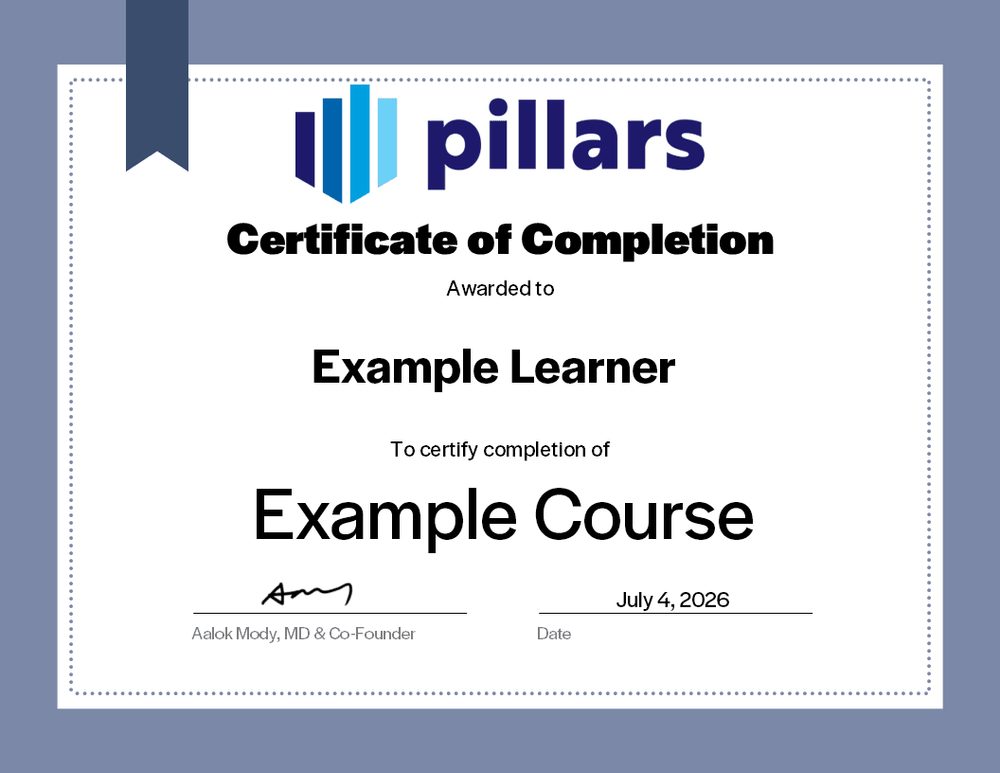
Your certificate of completion
Upon completion, you will receive a certificate signifying your completion. Add it to your LinkedIn profile, résumé, or professional-development record.
Common questions
The practical details, in one place.
Is this live or on demand?
This is a live course that may be delivered via webinar or in-person.
What does the session cover?
Direct public offerings, direct listings, and IPOs; issuer and shareholder objectives; intermediary roles; pricing and investor participation; and execution and liquidity considerations.
Are recordings, materials, or certificates included?
Materials are included with the course as well as a certificate indicating completion. Recording availability is subject to contract.
I am a CPA, can this course offer CPE credit?
CPE availability is confirmed for the specific scheduled offering before registration. Contact Pillars to discuss your team’s requirements.