
Introduction to Accounting
Understand how the income statement, balance sheet, and cash flow statement record business activity and connect to one another.
Read accounting as one connected business story
Overview · Outcomes · Audience · Agenda · Certificate · FAQ
Accounting becomes useful when the statements are viewed together rather than as isolated reports. Participants learn the purpose and structure of the income statement, balance sheet, and cash flow statement; the accounting equation; accrual accounting; and the links that carry net income, retained earnings, and cash through the system.
The session at a glance
Format · Live instructor-led webinar or in person Learning objectives · Explain the accounting equation; distinguish the purpose of each primary financial statement; connect net income, retained earnings, and cash across the statements; interpret common operating accounts; and classify business transactions by statement and cash-flow effect.
Live instruction. Follow the links between the statements.
Using actual Pillars accounting materials, the instructor traces net income, retained earnings, and cash through the income statement, balance sheet, and cash flow statement. Participants work through common transactions and see how accrual accounting and cash timing can produce different answers.


Who this course is for
Designed for professionals and students who need a practical accounting foundation before financial analysis, modeling, valuation, lending, investing, or corporate-finance work.
How to prepare
No prior accounting coursework is required. Bring a recent annual report or a set of basic company financial statements so you can identify the income statement, balance sheet, cash flow statement, and notes during the session.
Course agenda
Move from the accounting equation to connected financial statements and transaction analysis.
Start with the accounting equation
Define assets, liabilities, and equity and explain why every recorded transaction must preserve the balance.
Understand the income statement
Follow revenue recognition, expense matching, operating performance, taxes, and net income across a reporting period.
Understand the balance sheet
Classify operating, investing, and financing accounts and distinguish current from noncurrent items.
Build the cash flow connection
Apply the rules of cash, classify operating, investing, and financing activity, and reconcile beginning to ending cash.
Trace transactions across all three statements
Work through purchases, collections, borrowing, asset investment, and sales to see each statement impact and the links among them.
A certificate worth sharing
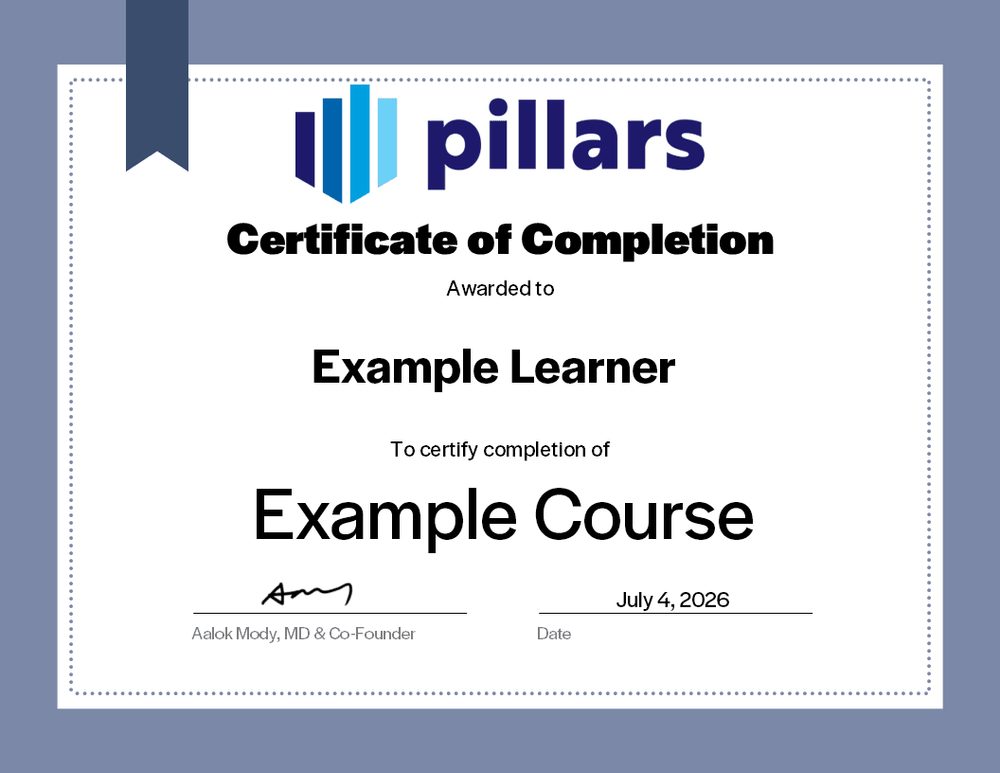
Upon completion, you will receive a certificate signifying your completion. Add it to your LinkedIn profile, résumé, or professional-development record.
Common questions
The practical details, in one place.
Is this live or on demand?
This is a live, instructor-led course delivered as a webinar or in person for a private business or school group.
What does the session cover?
The session covers the accounting equation, the income statement, balance sheet, cash flow statement, accrual accounting, transaction effects, and the key links among net income, retained earnings, and cash.
Are recordings, materials, or certificates included?
Live sessions include the materials used during the program and a certificate of completion. Recordings are not included unless explicitly arranged in advance.
I am a CPA, can this course offer CPE credit?
Yes. Eligible live sessions can be offered for CPE credit when the program is delivered and documented in accordance with Pillars’ CPE policies. Confirm the specific engagement details with Pillars before the session.
Bring practical accounting foundations to your team.
Give your team a shared way to read the financial statements, trace transactions, and explain how earnings and cash connect.