
Introduction to Capital Markets and Financial Math
Build a practical foundation in market structure, fixed-income instruments, and the financial math behind bond value and risk.
Understand the markets—and the math behind them
Overview · Outcomes · Audience · Agenda · Certificate · FAQ
Capital markets connect companies and governments seeking funds with investors putting capital to work. To follow that exchange, professionals need both a map of the market and a clear understanding of the cash flows being priced.
This session brings those two perspectives together. Participants learn how primary and secondary markets operate, then use time-value-of-money concepts to interpret bonds, yields, and interest-rate sensitivity.
The session at a glance
Format · Live instructor-led webinar or in-person
Focus · Market participants, Treasury securities, bond cash flows, present value, price and yield
Learning objectives · Explain capital-market structure and use financial math to interpret fixed-income value, return, and interest-rate sensitivity.
Live instruction. Clear market foundations.
What to expect
- A structured introduction to the participants and instruments behind capital-market activity.
- Practical examples connecting interest rates, Treasury securities, and bond cash flows.
- Step-by-step financial math, with discussion of what the answer means and which assumptions matter.
The goal is to make the mechanics understandable so participants can follow a financing or investing discussion with greater confidence.


Who this is for
- Analysts and associates beginning work in finance or capital markets
- Accounting and treasury professionals who need a stronger market foundation
- Business teams interpreting fixed-income instruments and financing alternatives
- Students preparing for quantitative finance topics
How to prepare
A working knowledge of basic arithmetic is helpful. Prior capital-markets experience is not required.
Bring a calculator and be ready to work through compact cash-flow examples. Focus on explaining the relationship among the inputs, the calculation, and the conclusion rather than memorizing a formula in isolation.
Course agenda
Move from the market framework to the cash flows, values, and sensitivities of fixed-income securities.
Map the capital markets and their participants.
Explain the purpose of primary and secondary markets and how issuers, investors, and intermediaries interact.
Read the structure of fixed-income instruments.
Compare Treasury bills, notes, and bonds and identify the cash-flow characteristics of a bond.
Connect time value of money to security value.
Work through present value, zero-coupon bonds, annuities, and coupon payments using manageable examples.
Distinguish bond prices and yield measures.
Explain the price-yield relationship and compare coupon rate, current yield, yield to maturity, and holding-period yield.
Describe interest-rate sensitivity.
Use duration and convexity conceptually to explain why bonds respond differently to changes in yield.
A certificate you can share
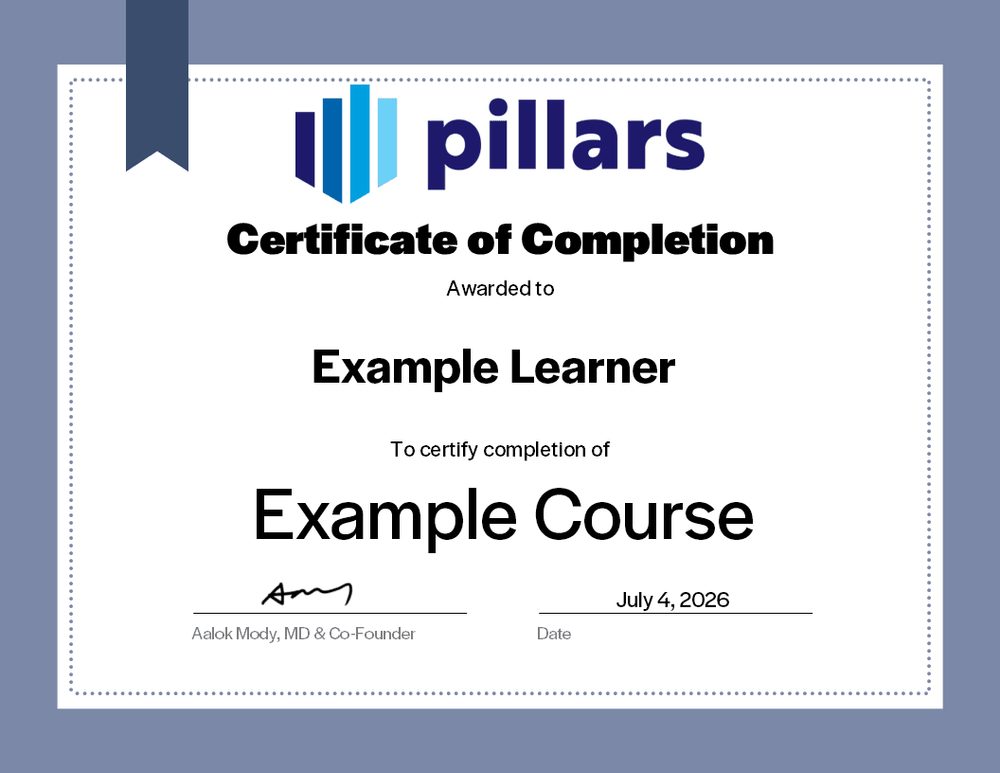
Upon completion, you will receive a certificate signifying your completion. Add it to your LinkedIn profile, résumé, or professional-development record.
Common questions
The practical details, in one place.
Is this live or on demand?
This is a live course that may be delivered via webinar or in-person.
What does the session cover?
Capital-market structure, market participants, Treasury securities, bond fundamentals, financial math, price and yield, duration, and convexity. The emphasis is on connecting the mechanics to financial analysis.
Are recordings, materials, or certificates included?
Materials are included with the course as well as a certificate indicating completion. Recording availability is subject to contract.
I am a CPA, can this course offer CPE credit?
Yes! Pillars is licensed to provide CPE credit hours for this course.