
Lease Accounting
Understand how lease terms become balance-sheet, income-statement, and cash-flow consequences.
Instructors

Matthew Holaves
Translate lease agreements into clear accounting conclusions
Overview · Outcomes · Audience · Agenda · Certificate · FAQ
Lease accounting sits at the intersection of contracts, estimates, classification, and financial-statement presentation. This live course gives participants a practical framework for identifying lease components, measuring lease assets and liabilities, explaining expense patterns, and understanding the effect of lease choices on reported performance.
The session at a glance
Format · Live instructor-led webinar or in person
Learning objectives · Identify lease components and key terms, distinguish major classification outcomes, calculate initial and subsequent measurements, and explain lease presentation and disclosure across the financial statements.
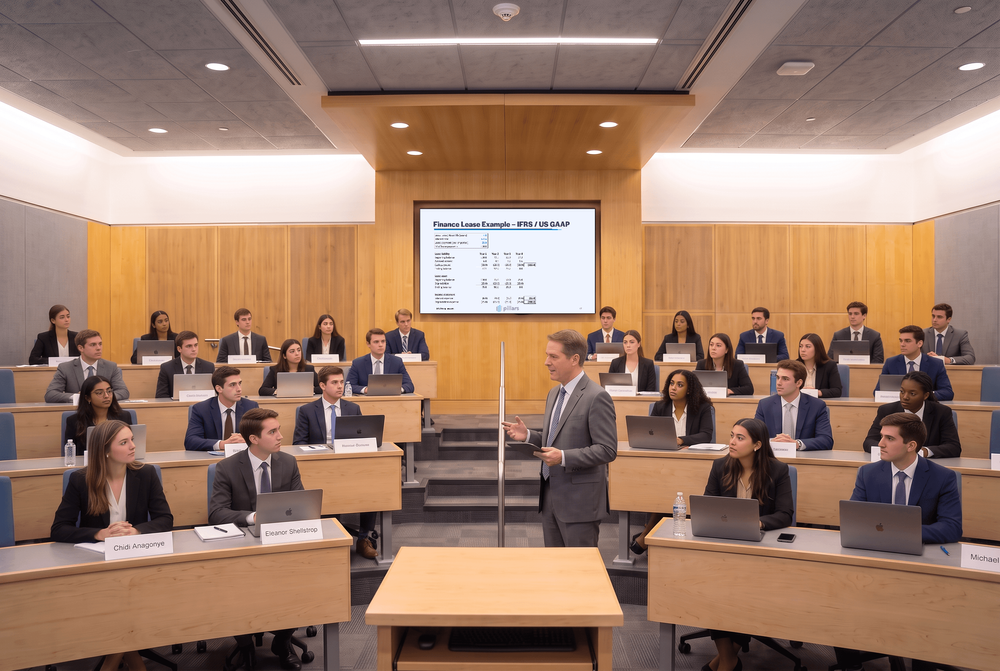
Live instruction. Practical lease analysis.
Move from contract language to accounting treatment with guided examples that make the judgment points visible. The instructor connects each calculation to the underlying economics and shows how the same lease decision appears across the financial statements.

Who this course is for
Designed for accountants, finance professionals, analysts, and managers who prepare, review, or interpret lease accounting and related disclosures.
Preparation that makes the session more useful
Bring a sample lease, term sheet, or public-company lease footnote if one is available. No advance calculations are required. Before the session, note the contract terms or disclosure items that create the most uncertainty in your current work.
Course agenda
Follow the lease-accounting process from contract identification through measurement, presentation, and disclosure.
Identify leases and components
We begin by determining when an arrangement contains a lease and by separating relevant contract components.
Establish the measurement inputs
We evaluate lease term, payments, options, residual-value assumptions, and the discount rate used in measurement.
Classify and initially measure the lease
We apply the classification indicators and calculate the opening lease liability and right-of-use asset.
Account for subsequent periods
We examine expense recognition, liability accretion, asset amortization, modifications, and reassessment triggers.
Present and analyze the result
We close by tracing lease effects through the statements and by interpreting commitments and disclosures.
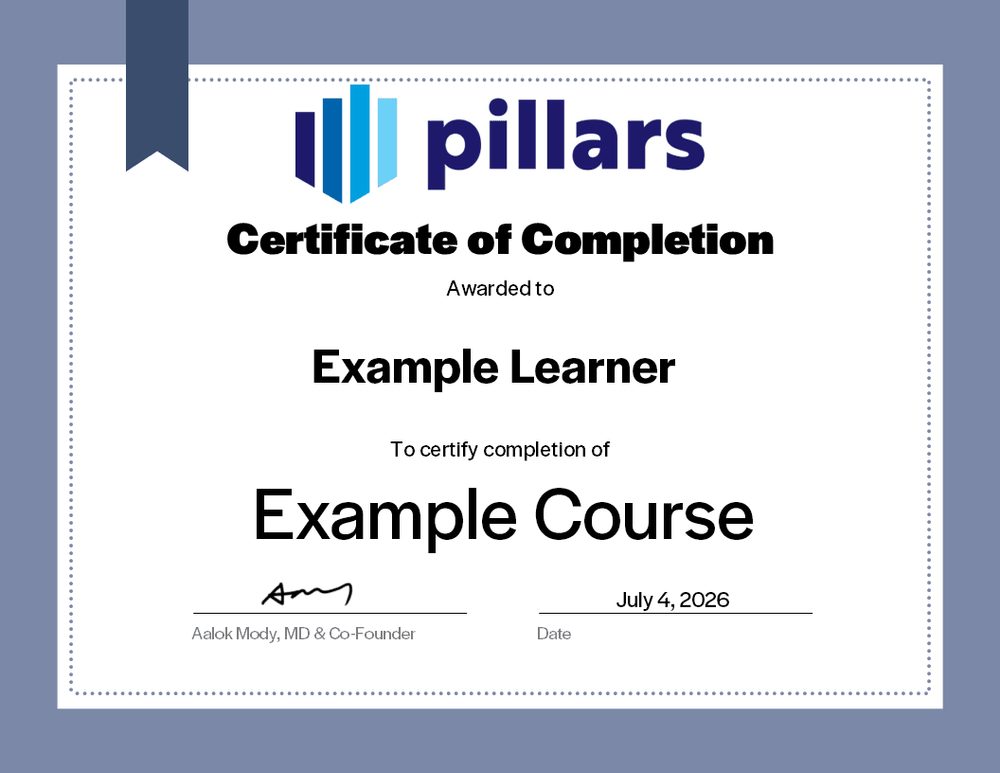
A certificate you can share
Upon completion, you will receive a certificate signifying your completion. Add it to your LinkedIn profile, résumé, or professional-development record.
Common questions
The practical details, in one place.
Is this live or on demand?
This is a live course that may be delivered via webinar or in-person.
What does the session cover?
The session covers identifying lease arrangements, reading key contract terms, classifying leases, measuring lease assets and liabilities, and explaining financial-statement presentation and disclosure.
Are recordings, materials, or certificates included?
Materials are included with the course as well as a certificate indicating completion. Recording availability is subject to contract.
I am a CPA, can this course offer CPE credit?
Yes! Pillars is licensed to provide CPE credit hours for this course.