
M&A Accounting
Follow an acquisition from purchase price through opening balance sheet and post-deal earnings.
Instructors

Brian Bland-Clark
See how transaction terms become acquisition accounting
Overview · Outcomes · Audience · Agenda · Certificate · FAQ
Acquisition accounting turns a negotiated transaction into a new financial-reporting baseline. This live course connects purchase consideration, identifiable assets and liabilities, deferred taxes, goodwill, noncontrolling interests, and post-close earnings so participants can understand both the mechanics and the business meaning of the opening balance sheet.
The session at a glance
Format · Live instructor-led webinar or in person
Learning objectives · Determine purchase consideration, identify and measure acquired assets and liabilities, calculate goodwill or bargain purchase, and explain acquisition-date and post-close statement effects.
Live instruction. From deal terms to opening balance sheet.
Use a transaction-focused case to connect legal and commercial terms with the acquisition-date entries. The instructor makes the allocation logic visible and shows how opening balances shape subsequent earnings and analysis.


Who this course is for
Designed for accountants, transaction professionals, auditors, corporate-development teams, and analysts who prepare or interpret acquisition accounting.
Preparation that makes the transaction analysis more useful
Bring a recent acquisition announcement, purchase-price allocation, or business-combination footnote if one is available. No advance model is required. Before the session, identify one transaction term or acquisition balance whose accounting effect you would like to understand more clearly.
Course agenda
Translate the transaction into acquisition-date balances, then follow those balances into post-close reporting.
Define the business combination
We begin by identifying the acquirer, acquisition date, accounting scope, and the transaction elements that require separate treatment.
Measure the purchase consideration
We calculate consideration transferred and examine cash, shares, contingent consideration, and replacement awards.
Allocate value to acquired balances
We identify tangible and intangible assets, assumed liabilities, and fair-value adjustments at the acquisition date.
Calculate goodwill and related balances
We reconcile consideration to net identifiable assets and address deferred taxes, noncontrolling interests, and measurement-period changes.
Explain post-close reporting
We close by tracing amortization, financing, integration costs, and purchase-accounting adjustments into future statements.
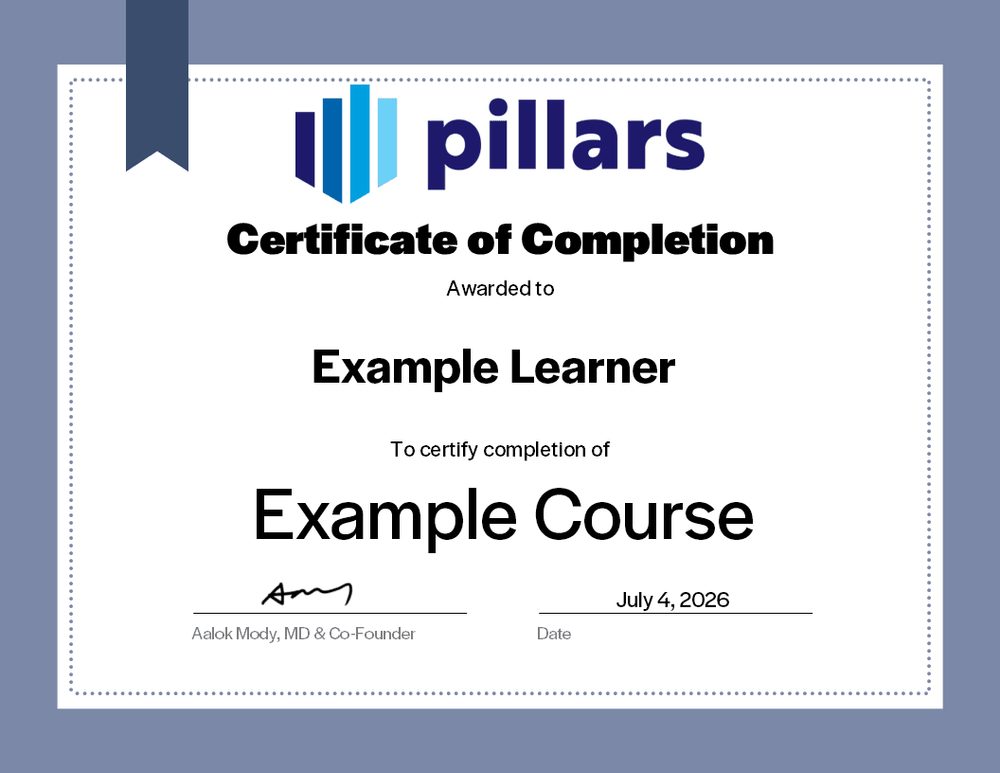
A certificate you can share
Upon completion, you will receive a certificate signifying your completion. Add it to your LinkedIn profile, résumé, or professional-development record.
Common questions
The practical details, in one place.
Is this live or on demand?
This is a live course that may be delivered via webinar or in-person.
What does the session cover?
The session covers purchase consideration, acquired assets and liabilities, purchase-price allocation, goodwill or bargain purchase, and acquisition-date and post-close financial-statement effects.
Are recordings, materials, or certificates included?
Materials are included with the course as well as a certificate indicating completion. Recording availability is subject to contract.
I am a CPA, can this course offer CPE credit?
Yes! Pillars is licensed to provide CPE credit hours for this course.