
Macroeconomics
Connect growth, inflation, employment, policy, interest rates, and exchange rates to the business decisions finance teams make.
Read the economic forces behind the numbers
Overview · Outcomes · Audience · Agenda · Certificate · FAQ
A change in inflation, employment, or interest rates can reshape a company’s costs, customers, and financing choices. Understanding the connections helps finance professionals ask better questions about the environment behind a forecast.
This session builds a practical framework for interpreting economic growth, business cycles, policy, and financial markets. Participants learn to distinguish what an indicator measures from what it can tell them about a business decision.
The session at a glance
Format · Live instructor-led webinar or in-person
Focus · Growth, inflation, employment, monetary and fiscal policy, interest rates, and exchange rates
Learning objectives · Explain core economic indicators and connect policy and market conditions to financial analysis.
Live instruction. Real economic context.
What to expect
- Clear explanations of growth, inflation, employment, and the economic cycle, connected through practical examples.
- Discussion of how monetary and fiscal policy move through the financial system and the wider economy.
- A framework for reading economic indicators, interest rates, and exchange rates with appropriate context.
The goal is to make economic news easier to interpret and business assumptions easier to challenge.


Who this is for
- Finance and accounting professionals interpreting business conditions and forecast assumptions
- Analysts and associates who need a clearer economic framework
- Managers whose decisions depend on demand, pricing, employment, or financing conditions
- Students developing a foundation for finance and business studies
How to prepare
You do not need an economics degree or advanced quantitative background. Familiarity with basic business and financial terminology will help you connect the discussion to your work.
Bring the questions you encounter when reading economic news or reviewing a forecast. Be ready to consider how a single indicator can support several interpretations, and why context matters before reaching a conclusion.
Course agenda
Connect the core measures of economic activity with the policy and financial-market forces around them.
Build a framework for economic growth and business cycles.
Distinguish microeconomics from macroeconomics, explain GDP and real growth, and trace the patterns of expansion and contraction.
Interpret inflation, unemployment, and economic indicators.
Examine what inflation and unemployment measures capture, where their limitations lie, and how several indicators can inform a more balanced view.
Explain money, banking, and monetary policy.
Describe money supply and the financial system, and explain the channels through which monetary policy influences economic activity.
Compare fiscal policy and stabilization tools.
Discuss the government budget, discretionary policy, and automatic stabilizers, including their influence on demand and the economic cycle.
Connect interest rates, exchange rates, and business decisions.
Interpret the yield curve, exchange rates, and purchasing power parity as part of the context for funding, pricing, and planning decisions.
A certificate you can share
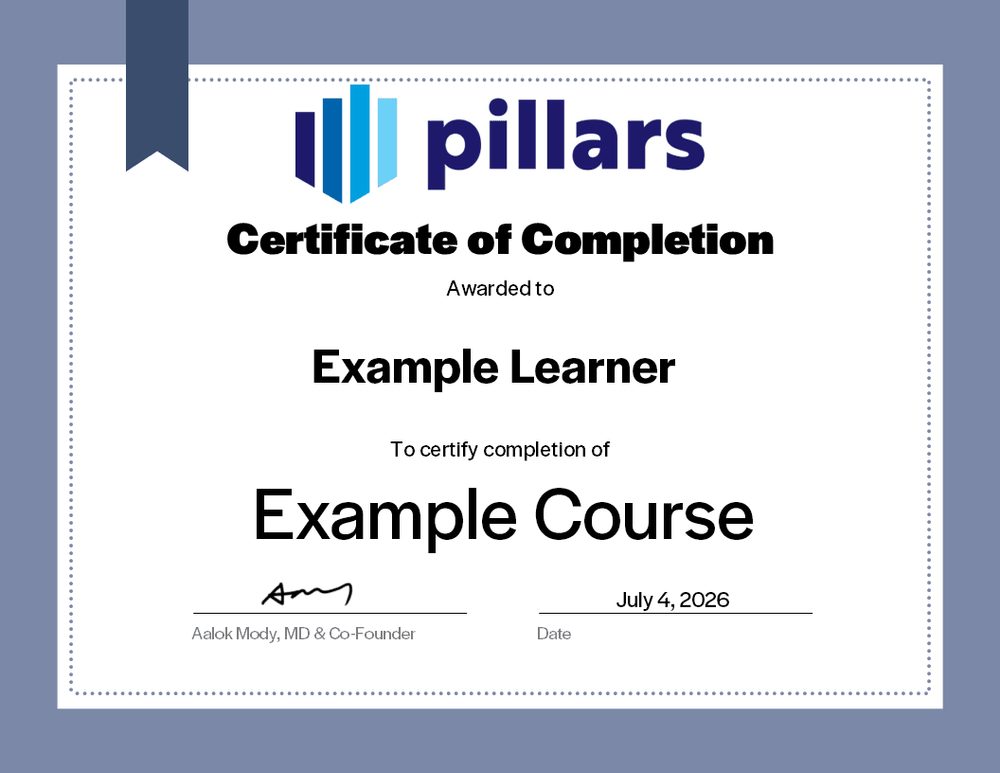
Upon completion, you will receive a certificate signifying your completion. Add it to your LinkedIn profile, résumé, or professional-development record.
Common questions
The practical details, in one place.
Is this live or on demand?
This is a live course that may be delivered via webinar or in-person.
What does the session cover?
Economic growth, business cycles, inflation, employment, monetary and fiscal policy, interest rates, exchange rates, and the interpretation of key indicators. The emphasis is on connecting concepts to business and financial analysis.
Are recordings, materials, or certificates included?
Materials are included with the course as well as a certificate indicating completion. Recording availability is subject to contract.
I am a CPA, can this course offer CPE credit?
Yes! Pillars is licensed to provide CPE credit hours for this course.