
Valuation Fundamentals - Live
Build a clear foundation in enterprise value, equity value, valuation multiples, and the strengths and limits of the major valuation methods.
Start with what value actually represents
Overview · Outcomes · Audience · Agenda · Certificate · FAQ
A valuation is more than a multiple attached to earnings. It depends on what is being valued, who has a claim on that value, and which evidence best supports the conclusion.
This session connects enterprise and equity value to the balance sheet and then compares the four primary valuation methods. Participants learn to reconcile methods, identify mismatched inputs, and explain the assumptions behind a valuation range.
The session at a glance
Format · Live instructor-led webinar or in-person
Focus · Enterprise value, equity value, diluted shares, comparables, DCF, and LBO valuation
Learning objectives · Calculate and distinguish enterprise and equity value, compare valuation methods, and interpret the multiples used in financial analysis.
Live instruction. Sound valuation judgment.
What to expect
- A practical explanation of enterprise and equity value, linked to the balance sheet and ownership claims.
- Side-by-side discussion of the four major valuation methods and the evidence each brings.
- Examples that expose inconsistent multiples, dilution issues, and the difference between a calculation and a conclusion.
The goal is a shared valuation framework that participants can use, explain, and challenge.


Who this is for
- Analysts and associates building a foundation for valuation work
- Accounting and finance professionals reviewing business values
- Corporate finance teams discussing investments or transactions
- Students preparing for valuation and financial-modeling topics
How to prepare
Familiarity with financial statements and basic corporate finance is helpful. Prior valuation experience is not required.
Review the relationship among assets, liabilities, and equity, and come prepared to discuss why different valuation methods can produce different answers. The session emphasizes consistent reasoning before model complexity.
Course agenda
Build a common valuation language, then compare the evidence and assumptions behind the major methods.
Connect enterprise value with the underlying business.
Explain enterprise value, invested capital, net operating assets, and the links between the balance sheet equation and valuation.
Distinguish equity value and diluted ownership.
Bridge enterprise value to equity value and examine how diluted shares affect equity and per-share calculations.
Compare relative and fundamental valuation.
Explain the logic of trading comparables, transaction comparables, DCF, and LBO valuation.
Match valuation multiples to the right measure.
Connect the value numerator to a consistent earnings or cash-flow denominator and distinguish book value from market value.
Interpret method strengths and valuation context.
Compare minority and majority interests and discuss the strengths and limitations of each method when forming a valuation range.
A certificate you can share
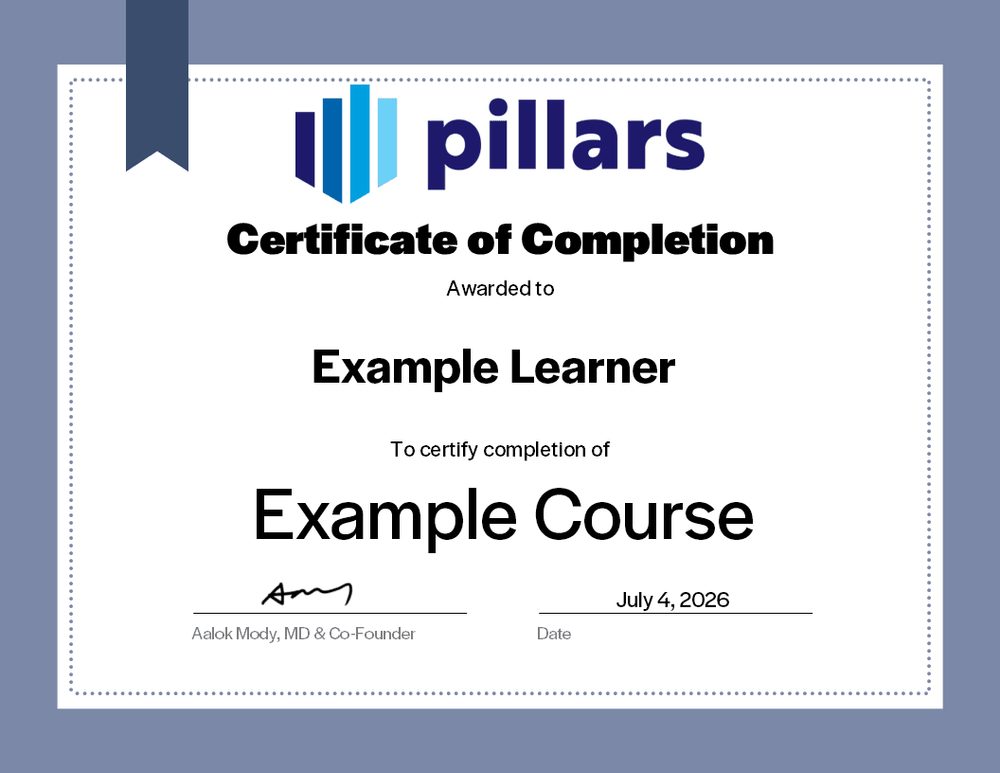
Upon completion, you will receive a certificate signifying your completion. Add it to your LinkedIn profile, résumé, or professional-development record.
Common questions
The practical details, in one place.
Is this live or on demand?
This is a live course that may be delivered via webinar or in-person.
What does the session cover?
Enterprise and equity value, share dilution, valuation multiples, trading and transaction comparables, discounted cash flow, and LBO valuation. The emphasis is on consistent calculations and defensible valuation judgment.
Are recordings, materials, or certificates included?
Materials are included with the course as well as a certificate indicating completion. Recording availability is subject to contract.
I am a CPA, can this course offer CPE credit?
Yes! Pillars is licensed to provide CPE credit hours for this course.