
Deferred Tax Accounting
Connect book-versus-tax differences to deferred tax assets, liabilities, and the effective tax rate.
Instructors

Matthew Holaves
Make deferred taxes understandable and auditable
Deferred tax accounting becomes manageable when temporary differences are traced back to their economic source. This live course provides a repeatable approach to identifying book-versus-tax differences, measuring deferred balances, evaluating valuation allowances, and reconciling the tax provision to the financial statements.
The session at a glance
Format · Live instructor-led webinar or in person
Learning objectives · Distinguish temporary from permanent differences, calculate deferred tax assets and liabilities, evaluate valuation-allowance evidence, and explain the tax provision and effective-rate reconciliation.
Live instruction. A clearer tax provision.
Work through the provision as a connected schedule rather than a collection of rules. Guided examples show how timing differences reverse, how valuation judgments affect the result, and how tax entries reconcile to the statements.


Who this course is for
Designed for accountants, controllers, auditors, tax professionals, and financial analysts who prepare, review, or interpret income-tax accounting.
Preparation that makes the provision more useful
Bring a recent tax footnote, provision schedule, or book-versus-tax question if available. No advance tax model is required. Before the session, identify one temporary difference or effective-rate item that you would like to trace from source data to the financial statements.
Course agenda
Build the provision from book-versus-tax differences, then connect the result to the statements and disclosures.
Establish the accounting framework
We begin by separating current tax expense, deferred tax expense, temporary differences, and permanent differences.
Identify and measure deferred balances
We compare book and tax bases and apply enacted rates to calculate deferred tax assets and liabilities.
Evaluate realizability
We assess future taxable income, reversal patterns, and other evidence that informs a valuation allowance.
Assemble the tax provision
We connect current and deferred components to the journal entries, balance sheet, and income statement.
Explain the effective tax rate
We close by building a rate reconciliation and interpreting the disclosures that explain the company’s tax profile.
A certificate you can share
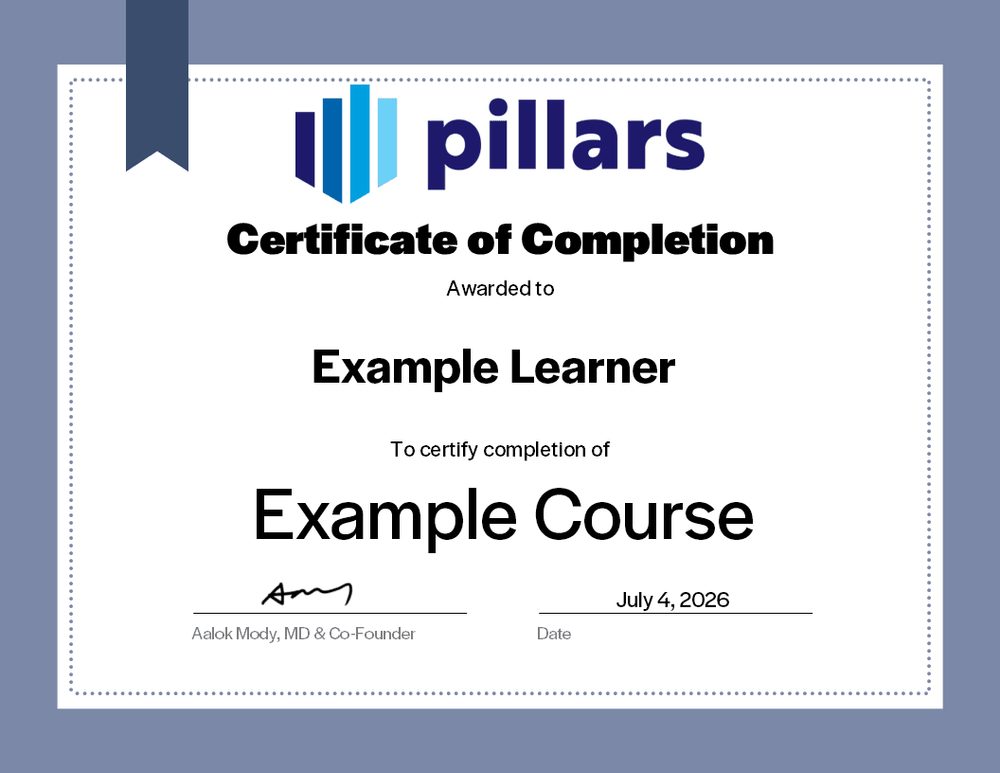
Upon completion, you will receive a certificate signifying your completion. Add it to your LinkedIn profile, résumé, or professional-development record.
Common questions
The practical details, in one place.
Is this live or on demand?
This is a live course that may be delivered via webinar or in-person.
What does the session cover?
The session covers temporary and permanent differences, deferred tax assets and liabilities, valuation allowances, and the tax provision and effective-rate reconciliation.
Are recordings, materials, or certificates included?
Materials are included with the course as well as a certificate indicating completion. Recording availability is subject to contract.
I am a CPA, can this course offer CPE credit?
Yes! Pillars is licensed to provide CPE credit hours for this course.