
Overview of Securities and Capital Markets
Understand how companies raise capital and how securities trade across primary and secondary markets.
Understand how capital moves through markets
Overview · Outcomes · Audience · Agenda · Certificate · FAQ
Capital markets connect companies seeking financing with investors seeking return. This live course explains how debt and equity capital are raised, how securities move from issuance into secondary trading, and how market structure supports liquidity and price discovery.
The session at a glance
Format · Live instructor-led webinar or in person
Learning objectives · Distinguish debt and equity financing; explain primary and secondary markets; describe the roles of issuers, investors, underwriters, dealers, and exchanges; and connect market structure to liquidity and price discovery.
Live instruction. From capital need to market liquidity.
Work through actual Pillars capital-markets slides that trace how companies obtain financing and how new securities reach investors. The instructor connects issuance, underwriting, exchange structure, and secondary trading to the practical decisions finance professionals encounter.


Who this course is for
Designed for finance, accounting, treasury, investor-relations, investment, and risk professionals—as well as students preparing for capital-markets roles—who need a clear view of how securities are issued and traded.
How to prepare
Bring a financing, investment, or market-structure question you would like to understand more clearly. No trading platform or advanced modeling experience is required; familiarity with basic corporate-finance concepts is helpful.
Course agenda
Follow the lifecycle of capital from a company’s financing decision through issuance and secondary-market trading.
Connect capital markets to corporate finance
Explain why companies seek external capital and how financing choices affect cost of capital and shareholder value.
Compare debt and equity capital
Distinguish creditor and shareholder claims, repayment obligations, tax effects, control, and risk.
Trace a primary-market issuance
Describe how securities are created, underwritten, priced, and distributed to investors.
Understand secondary-market structure
Compare auction and dealer markets and explain how exchanges and intermediaries facilitate trading.
Relate trading to liquidity and price discovery
Connect quotes, investor activity, and market-making to the information and liquidity available in securities markets.
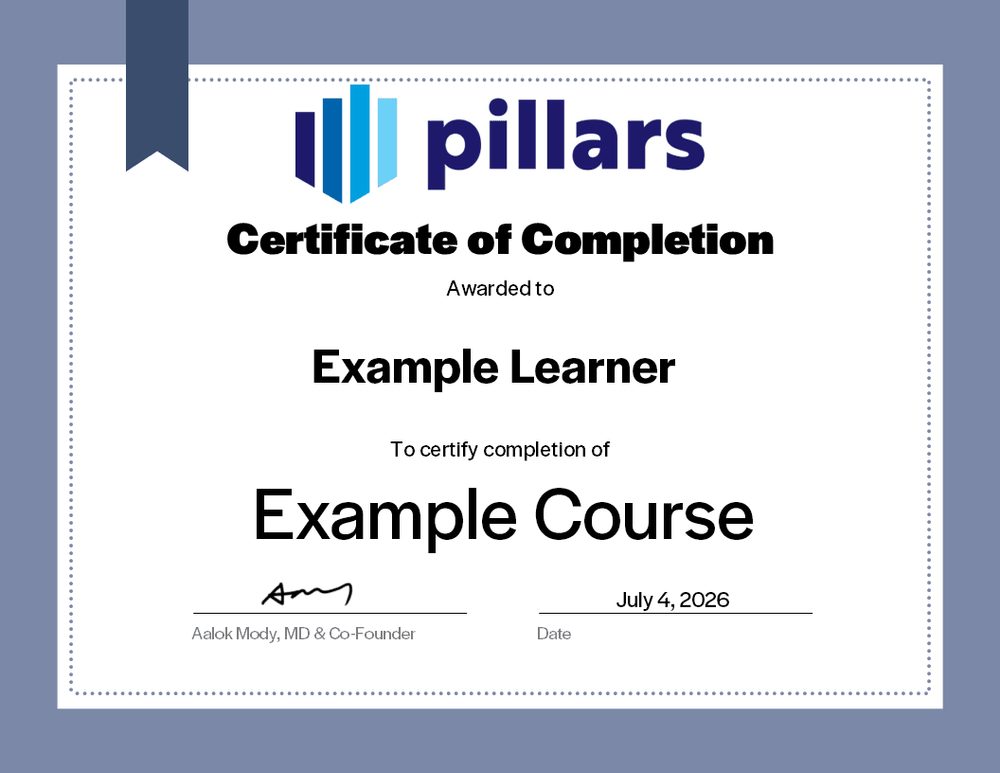
A certificate worth sharing
Upon completion, you will receive a certificate signifying your completion. Add it to your LinkedIn profile, résumé, or professional-development record.
Common questions
The practical details, in one place.
Is this live or on demand?
This is a live, instructor-led course delivered as a webinar or in person for a private business or school group.
What does the session cover?
The session covers debt and equity capital, the primary issuance process, underwriting, secondary markets, exchanges, dealer and auction structures, liquidity, and price discovery.
Are recordings, materials, or certificates included?
Live sessions include the materials used during the program and a certificate of completion. Recordings are not included unless explicitly arranged in advance.
I am a CPA, can this course offer CPE credit?
Yes. Eligible live sessions can be offered for CPE credit when the program is delivered and documented in accordance with Pillars’ CPE policies. Confirm the specific engagement details with Pillars before the session.
Bring practical capital-markets training to your team.
Give your team a shared framework for understanding how companies raise capital and how securities are issued, traded, and priced.